Sunday, 17 July 2011

[To Coin a World] A Brief History of the Grand Reman League

The Fall of the Reman Empire

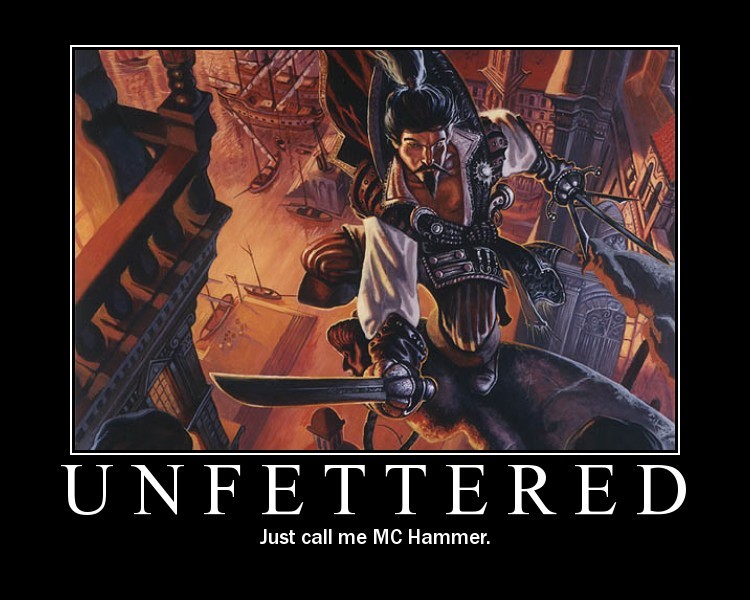
Reme at its height, 1559AUC

A thousand years ago, the known world, from Aratha to Soleille to Zwuyala, was ruled from the great city of Reme. From humble beginning as a city founded by twin orphans, Reme grew to become the largest city on the coin, its streets thronging with the press of a million citizens. Its legions and tribunes enforced a long era of peace and prosperity. Elven princes paid tribute to the Reman emperors, the first human rulers to be acknowledged on a more-or-less equal basis, and fought together with them in the War of the Lunar Frog and other great conflicts against evil. It seemed that, within the reach of Reme, the Coin's centennial cycle of great kingdoms rising only to be smashed by barbarians and black-hearted sorcerers had come to an end.

It was instead perhaps an interregnum. As peace reigned across Spindlewick, the Reman elites grew decadent and perverse, delving into the pursuit of obscene luxury. Taxes raised from the provinces that once paid the salary of the legionnaires now went straight to the banquet tables of senators and patricians. Border forts crumbled, the provinces went undefended, and the famous Reman roads fell into disrepair. Over the years, the Palace of the Ceasars was given over to a series of terrible Emperors, who alternated between mad, bad, and merely extremely corrupt. In 1889AUC, the Imperial family gave up on the whole game and decided to sell the entire Empire at open auction to the highest bidder.

This turned out to be not a very good idea.

The Not Very Light Ages


It was a bit shit all around, to be honest

In the chaos following the Leveraged Sell-Out, the remnants of the Empire collapsed as waves of barbarian invaders swarmed across the frontiers. Amongst them were the Bellagoths, a clan of female vampire-worshippers who would go on to establish the Republic of Orzovia, and the Ostremos, whose chieftain famously stopped at the gates of ruined Reme itself and declared it wasn't worth the effort of conquering. The elves retreated into their forests, the dwarves into their mountain halls. Spindlewick was plunged into an age of terror, decay, and barbarity.

In most of the former empire, this lead to several hundred years of petty kings, bandit chieftain, feudal squabbles, and general abuse of the peasantry. One remote province of the Empire, Cisrhania, was particularly devastated after the fall. As the Reman rule over the monstrous tribes of the Worse Lands collapsed, the dark sorcerer Morevac the Merciless gathered them together into an immense horde. In 1939AUC, his dark forces surged across the Rhâne river, and set the province alight from end to end. From his black tower of Rhâner Khal, Morevac consolidated his rule, condemning the province to oppression and darkness.

And thus it was, for more than five hundred years; enough time for the people of Spindlewick to forget the glories of the Reman Empire, and become accustomed to poverty, deprivation, and a general lack of joy. It would only be in the late 2400s, when a humble merchant from the tiny village of Waldorf-on-the-Rhâne fought off a tribe of goblin bandits in the Disenchanted Forest. Examining the corpses, the merchant, Astrid Kratzburg, was startled to discover that the straggly goblin bandits carried an immense amount of Reman jewelry, much marked with the paisley wreath of the Ceasars. When she followed the trail back to their makeshift camp, she was startled to discover that the original bearer bond granting dominion over the Reman Empire had been held within the hands of goblin bandits for the past three hundred years.

The Merchant Empress Rises

Astrid von Kratzburg, first Kaiserina of the Reunited Imperium

The young merchant had been a minor participant for some time in the underground resistance to Morevac's rule, and with this document, she saw the key to defeating him. With perhaps dubious legal grounding, but the best of intentions, she declared herself Empress of the Reman Empire, and set to gathering together a base of support. Her allies within the Cisrhanian underground were easy to convince; with the sale of much of the Reman crown jewels, she was even able to hire a reasonable number of mercenaries. A small army began to gather under her auspices on the outskirts of the Disenchanted Forest, but it would never be enough to defeat Morevac with his sorcerous supremacy and his monstrous allies. For that, she would need allies.

A plan was hatched. Years as a only somewhat honest merchant had given Astrid a keen eye for the credulous, and when Prince Relathio of the Dawnwind Elves came to her attention, she was ready for him. Relathio was a fine specimen of Elvish nobility; graceful, gallant, and about as gullible as a guppy. Using her newfound imperiousness, she convinced Relathio of the existence of an ancient treaty between the Reman Emperors and the Dawnwind Elves, promising martial assistance in times of need. Relathio and the Dawnwind Elves, who had in any case not particularly noticed the fall of the Reman Empire in the first place, gracefully acceded to assist.

With the support of the Dawnwind Elves guaranteed, nearby baronies flocked quickly to Astrid's banner. Haggling over the price of salted eels and spoiled eggs had given the new Empress better training in diplomacy than most noble academies, and she easily won the petty barons to her side with promises of autonomy within a new Imperial League. Even the burghers of Pyresburg were won to her side with trading concessions and fiery oratory. With her hard-won allies, the Empress was ready to free Cisrhania from the rule of Morevac.

A bickering collection of mercenaries, elven nobles, and petty militia would have been no match for the orcs, ogres, goblins, and monsters that made up Morevac's guards, let alone his mystic power. However, a Reman legion, led personally into battle by its Empress, turned out to be more than a match for the Shadow Over Cisrhania. In pitched battle upon the grassy fields before Waldorf-on-the-Rhâne, the League's forces shattered the armies of Morevac. Auxiliaries stormed his fortress of Rhâner Khal, freeing his tormented captives and destroying his obscene experiments. As he fled Cisrhania for Orghosh Pass and the Blackstone Mountains, Morevac himself was hunted down and captured by elven windrunners.

As Morevac hung from his noose in Waldorf's town square, Astrid Kratzburg, proclaimed the rebirth of the glorious Reman Empire; or to be more accurate, the birth of a new Imperium, more league than empire, more Cisrhanian than Reman, built not to service the needs of a single city but to protect the freedom of the many. And Waldorf-on-the-Rhâne, her home, the village held so long under the shadow of sorcerous rule, would be its new capital.

An Imperial Renaissance

The Rhânebridge at Waldorf

Under the rule of Empress Astrid, Waldorf would grow from a tiny thorp to a bustling burg, and her reborn Imperium would expand at a similar pace. Astrid established a framework that made it simple for baronies and petty kingdoms to join the league, without sacrificing any of their power. Kingdoms would become grand duchies within the league, with the right to send Electors to the Imperial College in Waldorf and choose the new Kaiser upon the death of the old. In return, they would gain trade concessions, open their borders to the elves, and membership in a pact of mutual protection. It was an appealing recipe, and it brought kingdoms into the new empire like seagulls to a picnic.

A new age of prosperity dawned in central Spindlewick. Merchants and pilgrims could freely travel the breadth of the Empire without concern for borders and tariffs. The elven forests were opened once more, and the dwarven holds reestablished their trade missions missions in the lowlands. Imperial levies held the dark tribes of the Worse Lands at bay, and even the raiders and pirates of the Friendly Sea kept to their hidden ports. A brief period of uncertainty reigned upon the death of Empress Astrid, but the confirmation as Kaiser of her son, Ulrich Remulus von Kratzburg, stilled any movements of discontent.

Ulrich proved just as capable a leader as his mother. In his reign, the wizarding academy of Phagemorts would be established to give the Imperium a sound source of sorcerous talent, and the first of many wars against against the Kingdom of Soleille would be fought and won. Later successors would establish a network of Imperial roads and canals, extend the reach of the Reman league to colonies in Zwuyala, Yonda, and further afield, and fight glorious wars against the enemies of the Grand Reman League.
Modernity and the Grand Reman League

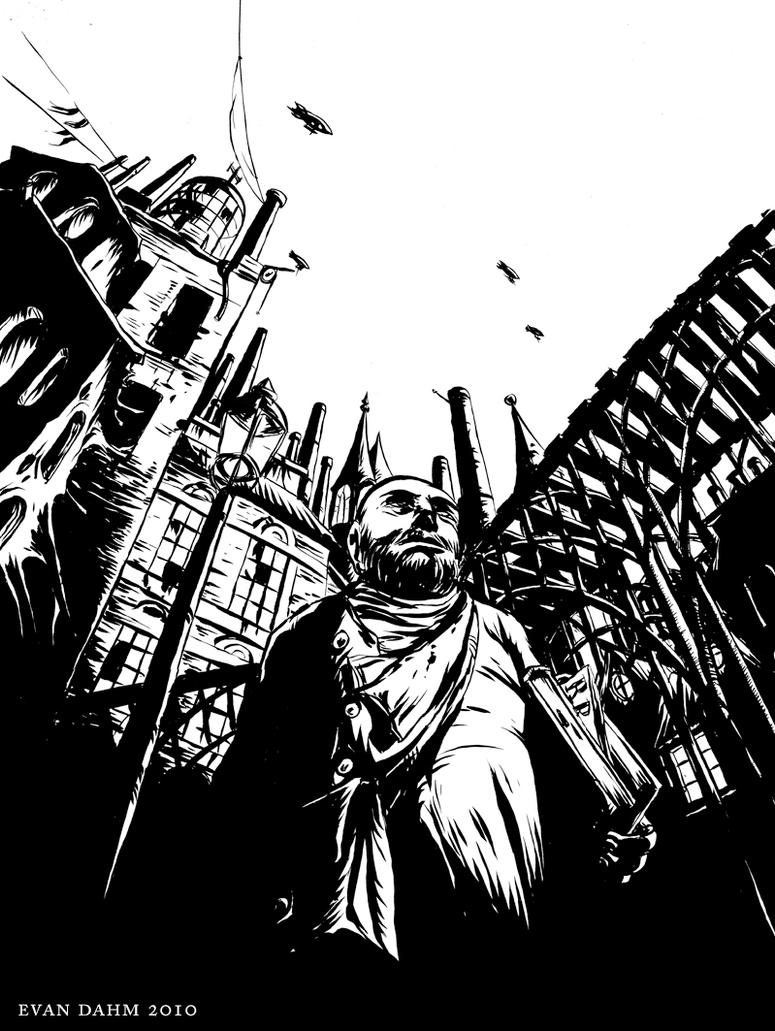
A street-level view of modern Waldorf

Four hundred years after the death of the Empress Astrid, the empire she founded has lost none of its diversity and vibrancy, but perhaps it has lost most of the unity it once had. According to a commonly held saying, the Grand Reman League "is neither particularly grand, nor does it include the city of Reme within its borders, and is only a league in the sense of a grudgeball league, in that it is an excuse for its members to dress up in funny colours and beat the stuffing out of one another".

Its last real exhibition of unity was during the war against Soleille a hundred years ago, fought over the absorption of the crescent city of Languille as an Imperial electorate. The only wars that have been fought lately have been between duchies, not beyond the Empire's borders, and the current Emperor, Otto Herbert Kratzburg Franz von Sumpfkastell, also known as Otto the Useless, owes his election as much to the mutual hatred of the other candidates as it does to his delicate political marriage. Within the borders of the league, bandit chieftains and goblin tribes are becoming bolder than even before, attacking larger caravans and even small villages and baronies.

Still, the Grand Reman League is still the dynamic heart of Spindlewick; its workshops export manufactured goods to the entire continent, its finest sorcerers could match spells with any the Coin have to offer, its trading companies reach across oceans, and its distant colonies still pay heed and tribute to the motherland. As the Coin flips into a new age, it remains to be seen whether the future lies with the Ceasars of Waldorf, but it is almost certain that the pieces that make up the Reman League have important parts to play.

[To Coin a World] The Elves of Yonda and the Downunderdark

As mentioned in my previous post, wizards are a repressed minority in elvish society. But as John asked in the comments, why didn't they just rise up and overthrow their magically-powerless subjugators and declare the elf kingdoms and magocracy?

Well, a few generations ago (which, considering the elvish lifespan, means quite a long time by most standards) that's exactly what the wizards tried. At the time, there were even more elvish wizards than there are now... but they still failed. Elves are actually rather bad at wizardry, taking decades to master arcane arts that the rarer human wizard can master in a few years.

While the elf wizards could do a whole slew of things that the warriors they battled could not, they in turn could not do a few things that the warriors could. Like wear armour. Or fight with a sword when they ran out of power. Or jog up some steps without getting winded. Ultimately, the wizards lost.

The survivors of the attempted rebellion were rounded up, and banished to the mainland of Yonda. While Yendys is a tropical paradise, Yonda is a sun-blasted, high-background-magic wasteland, infested with spiders and snakes and all manner of other poisonous monsters. Many of the exiles died, and those that didn't were warped and twisted. Their pasty complexions, the result of years spent studying indoors were burnt, their hair bleached, their eyes constantly irradiated by the arid climate and harsh sunlight. The magic of the land coupled with the peculiar biology of the elvish people meant that their descendants have obsidian-black skin, white hair, and sinister red eyes to this day. The survivors, after the first few years, got so sick of their prison continent that they took the desperate measure of burrowing and escape tunnel. Under the ocean. While this utterly insane idea was probably the result of extended sunstroke, it actually worked. The crust of the Coin is shot through with vast carven networks stretching from the Hublands all the way out to the Rim, and the "Dark" elf rebels took to these caverns, and mostly haven't returned to the surface since, so strong is their loathing of sunlight. They now have vast underground kingdoms, ruled by the best wizards among them, and have a long-standing hatred of their surface kin.

So, in short... the dark elves of the Coin are Australian Convict Wizards.

Thursday, 14 July 2011

[To Coin a World] Wizards in Elvish Society

The Elves of the Coin have a peculiarly lopsided society. Most elves live in settlements hidden deep in the woods, or in the elvish city of Yendys, on its idyllic island off the coast of the hellish continent of Yonda. Apart from a few who act as scouts and rangers, patrolling the elvish borders and promising a swift and arrow-studded death to intruders, the vast majority of elves live relaxed lives that most human nobles would be envious of.

Which is a bit strange, considering that these elvish nobles have no peasant class to support this lifestyle. There are no farmers, goat-herds, bakers, plumbers, or carpenters among the elves (excepting certain individuals who take up such lives as hobbies or artforms). So how does elvish civilization function?

A wizard did it.

Or more accurately, a whole bunch of wizards do it every day with a host of spells designed to do away with the underclass workforce. As a result elvish wizards are in fact treated as an underclass themselves. In a society comprised of beautiful socialites and athletes, the bookish magi are shunned and ignored, unless some spell has failed and needs replacing.

Understandably, some elf wizards are less than happy about this, and leave. Many elvish adventurers are wizards primarily because of this. They might be considered ugly and "common" by elf standards, but to a human, any elf is beautiful, and wizards are people to be given respect (if you don't want to end up as some type of amphibian). To a lowly elf plumber-mage, the adventuring life is like a dream come true.

[OuterZone] Krazon Traditions & Superstitions

Spiritual Traditions

Muragh osh ku muragh dakh.
To strike first is to strike last.

A number of spiritual and philosophical traditions have arisen upon the Krazon homeworld of Nokhan in its five thousand years of civilised history, but only a few continue to capture adherence within the modern Empire. Perhaps most prominent are the spiritual teachings of Oblakh, the Sixfold Path. This was the faith of the Emperors who unified Nokhan, and continues to be the dominate spiritual tradition even now during the Korugh Regency.

The Sixfold Heart

Kraz kor ku durab, maz kraz hekh ku madish.
A brave heart is a strong one, but a sixfold heart is invulnerable

The name Krazon comes not from their word for people, or for world, or from the name of some ancient dynasty. It comes from the word krazonku, meaning one of the heart. In the Oblakh tradition, to be Krazon is to listen to the six spirits that dwell within the heart's ventricles.
  • Bokh, the spirit of duty and honour. Associations: Dirt, the colour red, the number one.
  • Kora, the spirit of bravery and strength. Associations: Stone, the colour orange, the number two.
  • Pazh, the spirit of ingenuity and wisdom. Associations: Wind, the colour yellow, the number three.
  • Mozha, the spirit of kindness and mercy. Associations: Water, the colour green, the number four.
  • Hoba, the spirit of friendship and humour. Associations: Ice, the colour cyan, the number five.
  • Mabh, the spirit of trickery and selfishness. Associations: Lightning, the colour blue, the number six.
It is common, although theologically incorrect, for Krazon to speak of the spirits as if they were personified individuals. "By Bokh's beard!" and "By Mabh's mace!" are colloquial expressions that express surprise or anger, invoking the names of the spirits or krazald.

The Sixfold Heart is also reflected in the six castes of ancient Krazon society:
  • The Bokhan, the farmers and workers.
  • The Koroz, the warriors and nobles.
  • The Pazhan, the priests and holy men.
  • The Mozhon, the healers and servants.
  • The Hoban, the merchants and innkeepers.
  • The Mabhan, the unclean and criminals. Foreigners, non-followers of Oblakh, and non-Krazon are traditionally included in this caste.
In modern Krazon society, caste is more a cultural marker than one of occupation. Indeed, nowadays the majority of Krazon merchants and industrialists belong to the Pazhan caste. Since the abolition of the Warrior's Privilege under the current Regency, caste is officially meaningless, but still carries vast weight in society. Impoverished Mabhan can still expect oppression and disdain from high-caste Krazon.

Blood Quest

Lokh tar ogar, kraz muragha durgad.
Through blood and storm, a warrior's heart is forged.

Where other societies might see fit to challenge their youth with a dangerous ritual at the transition to adulthood, Krazon culture demands sacrifice at every turn. It is traditional for any Krazon who achieves a major milestone to undertake a lokh saba, or blood quest; one equal in difficulty to the challenges they are expected to face in their new life.

A blood quest may take many forms, depending on the milestone to be achieved. All, however, involve blood, violence, and suffering. A few examples:
  • To prove their worthiness for motherhood, pregnant Krazon females must hunt and kill a mother kroggar by hand before their child is born. If they fail, both they and the child will be declared Mabhan.
  • In preparation for marriage, a Krazon groom must first defend himself against the sequential murder attempts of his father-in-law, his mother-in-law, and finally his bride-to-be, before embarking on a vision quest into the deep desert to seek wisdom and patience.
  • To join the Imperial admiralty, a Krazon war-captain is expected to wrestle a sea monster known as the Orxan; a fierce, many-tentacled creature that lurks in the deep crevasses of Nokhan.
  • A Krazon male is not considered of age until he can best his oldest male relative in single combat.
Since the installation of the Korugh Regency, many of these traditional blood quests have been abolished or even banned. Positions in the Imperial bureaucracy no longer demand ritual combat; instead, a simple competitive examination suffices to prove one's competence. Still, cultural change is slow, and the Krazon military continues to unofficially maintain its traditions.

Common Superstitions

Muragha morvad tar glash.
A warrior dies with his blade.
Kroggar hekh ku kraz, zed darvad mudh.
Six kroggar make a heart, seven destroy a world.
Dobru kara taron lronad lokh ku aksar darv.
To cross water without spilling blood is to invite disaster.
Ruad murkurad ku zalt Mabh, ruad daklarad glash Bokh.
A whispered promise is Mabh's mace, a bellowed oath is Bokh's blade.

Wednesday, 22 June 2011

[Apocalypse World] Honeytown and the Space Wasps

So, despite having run and designed a bunch of Apocalypse World hacks up to this point, I'd never actually busted out the original eleven herbs and spices up to today, when my friends and I ventured into the psychic maelstrom for the first time.

Taking a leaf out of Fabricated Realities' book, I made sure the play space was as apocalyptic as possible, scattering images of the apocalypse all over the table and the walls and keeping light to a minimum, with a message of despair scrawled across the whiteboard. This is the first time we'd really done anything like this, and I think it helped build a better play experience, creating a discontinuity between the game play and the outside world.

We settled on an island-based Apocalypse World; I printed out a Russian-language map of the Solomon Islands and Guadalcanal to serve as the baseline map. Foreign-language maps work great for creating distance between the location and the players. The one piece of knowledge about the apocalypse that we established early in play was that all the bees - all insects in fact - were dead, and Honeytown was (as a result of the Savvyhead's work) the only place known to grow fruit rather than scavenge tinned fruit from the remains of the Golden Age.

The players arrived slowly and snapped up playbooks somewhat haphazardly; one player (Colonel) arrived about twenty minutes into character creation. We had:

Truth the Hocus was a Greek-style philosopher-teacher who preached an almost Nietzchean dogma of extreme self-reliance. From his traditional pulpit in the town square of Honeytown, he declaimed that the apocalypse had been a liberating event, freeing the Human Will to Power from the shackles of societal strength.

Josie the Quarantine washed up on the shipwreck beaches east of Honeytown a few weeks ago in a strange lifepod, where she was rescued by Truth. She had sort of settled into his little entourage for the time being, despite her strong dislike of his philosophy; it reminded her of the Nietzchean philosophies of her superiors.

Whitmont the Savvyhead had been a child when the apocalypse had struck, fascinated with insects. He remembered fleeing devastation on a plane with his mother, but little about the contents of the apocalypse - the psychic maelstrom had evidently erected a strong barrier around people's memories from the Before. His childhood fascination with insects would become Honeytown's salvation when he used his weird technical skills and a shipload of dead Africanised bees to create a hive of cyber-zombie bees that pollinated the orchards around Honeytown.

Colonel the Hardholder was a soldier from the Before who remembered Josie's face from a youth spent in uniform. Using his military equipment and knowledge, he ruled Honeytown with a gentle fist, turning it into the market centre for the island chain. He held to some extent with Truth's philosophy, though in an apparent paradox, also supported an infirmary for those who suffered the cancerous wrath of the angry sun.

The 1st Session

We start the game with the lights going out all over Honeytown.

Okay, we actually start the game with the start-of-session moves; Colonel misses his wealth roll and thus Honeytown is set on the verge of starvation; the last fruit harvest failed with disease running rampant amongst the fruit-pickers and his gang gorging themselves on the remaining supplies in the Tiki Bar.

Then we see the lights go out, from the Ferris wheel look-out to Whitmont's apiary-lab, and it's not a good sign. The power's supplied by overland cable from Vasiligrad on the other side of the island, where an old Soviet nuclear submarine is beached in a bay. Cannibal tribes that run the interior jungle tend not to fuck with it since Colonel and Captain Vasili joined forces to burn out their villages last time they did. If they're fucking with the cable, it's a sign they're losing respect for the strength of Honeytown.

The sudden power cut freaks out the loiterers in the Tiki Bar, which lounges beneath the Ferris wheel in the old fairground that serves as Honeytown's market. The loiterers include Truth and Josie, who are watching idly by as Colonel's number-two, Parson, has the shit kicked out of him by another gang member over a woman. Colonel comes out of his hut and isn't having any of this shit; he threatens Pierre, the gang member, with dismemberment if he doesn't let the fuck go of Parson (go aggro, 7-9). Pierre backs off slowly, hands in the open, and drags the woman, Chazza, away with him. Parson, who's completely wasted, blearily turns to Colonel and then collapses to puke his guts up.

Whitmont's working in his lab, trying to get to the bottom of this bee shit, when the power cuts out. He swears, and kicks the backup generator into gear. It splutters and halts - out of fuel. He swears again. Trying to work out what's going on, he taps into the psychic maelstrom (augury, 7-9) using his psychic antenna - his zombie bee hives. Reaching out to look at the power cable, he sees it's been severed deep in the jungle, in a place surrounded by anger, engines, and trees.

Driving into town in his customised Humvee, he relays this information to Colonel, who tries to scare up his gang; they are, however, too busy listening to Truth, who's speaking the truth (7-9) about how the cable represents reliance, and how the cannibal gangs have struck a blow in a war against Honeytown, and how they must be destroyed. After the mob disperses off to seek vengeance (orgy of violence), Truth and Josie decide to join Colonel and Whitmont on their drive into the deep jungles of the island.

Cue generate badness, and the gang runs into an old bridge over a ravine, covered in corpses. As Whitmont and Colonel move in to investigate, they recognise the facial tattoos of some of the more intact corpses - they're from the cannibal tribes of the interior. It's at this point they start to realise there's more to this situation than just a couple of savages severing the cable. Colonel steps out onto the bridge to test its strength and see if it will hold the Humvee. It won't - as soon as he gets to the centre of the bridge, it explodes, showering everyone nearby in pieces of concrete and fleshy chunks of Colonel.

(Colonel's player, at this point, had to leave to another appointment. We didn't necessarily know whether he'd be able to join us for another session, so he suggested that Colonel die explosively. Why not?)

A small gang of quad bikes come roaring out of the jungle at this point, accompanied by the chatter of gunfire. We have no idea who these pasty tattooed fuckers in brown jumpsuits are, so Truth reads the situation (10+), identifying the leader of the bikers as being a small guy driving a giant ATV with a mounted .50cal. He goes aggro (7-9) with a hunting rifle, trying to get the leader to scatter or flee; they choose instead to bunker down behind cover.

Whitmont, his ears ringing from the explosion, leaps back behind the wheel of the Humvee and throws it in reverse as Josie provides covering fire with her assault rifle from the top hatch. Unfortunately, he reverses at high speed into a tree, tearing off the side of the Humvee, throwing Truth to the ground, and knocking himself out on the steering wheel. Thinking fast, Josie grabs the wheel, hits the gas, and speeds out of the ambush towards Honeytown, leaving Truth behind for dead.

Driving through the jungle near Honeytown, Josie can't help but notice that it's on fire. Truth's followers have seemingly run riot (in an orgy of violence), setting fire to the nearby jungle, Honeytown's precious orchards, and the old resort building. It's evident some kind of pitched battle is taking place near the Ferris wheel; someone is firing a sniper rifle from the top perch. Josie flashes back to the Before; remembering a rioting crowd in Hong Kong surging against the barricades her unit was guarding, the whole city on fire. She chooses to bypass Honeytown's emerging unrest, and speeds straight to Whitmont's lab to apply some emergency first aid.

Remembering her training, she realises that the bruising to Whitmont's head probably indicates some sort of swelling in the brain. She'll have to drill a hole in his skull to relieve the pressure, and there's no time to waste. Acting under pressure (10+), she coolly and smoothly uses Whitmont's power drill to stabilise Whitmont. We decide this counts as opening your brain, and further more, suffering psi-harm. Whitmont nails the roll to open your brain; the ghosts of dead bees show him a vision of wasps descending from space to ransack the islands, destroying everything he has built. On the other hand, he also hits psi-harm with a 10+, meaning I seize control of his character and have him unleash the swarm of cyber-bees on Honeytown.

Meanwhile, Truth wakes up in a clean, white chamber with a medical-looking type babbling at him in Ukrainian. He's strapped to a surgical table, with his wounds stitched up. Realising that Truth doesn't speak a word of Ukrainian, the doctor calls over the short old guy who lead the ATV bikers, Orlaf. He reveals that his men have captured Vasiligrad and besieged K-19, the nuclear submarine that powers most of the island. For some reason, he keeps referring to the islands as "weak humans", despite his apparent appearance as 100% human. Orlaf demands that Truth help them capture K-19 intact; in exchange, he will grant Truth a quick and painless death as opposed to a long and torturous existence.

Truth manipulates (7-9) Orlaf into agreeing instead to set him free if he can help them take out K-19. To provide concrete assurance, he calls up Captain Vasili on the radio and gets agreement that he will be let on board, and then allows Orlaf to fit him with a remote explosives vest. He discovers that the Ukrainians are aboard some sort of huge plane that has landed on the west side of the island, and that they're all dressed in brown space suits with red flag patches on the side. They lead him to the beach between their lines and K-19, and he walks out, hands in the air.

That's where we end the first session, with a nuclear-armed submarine on the verge of launching its cargo, Ukrainians from space on a rampaging warpath, and Honeytown tearing itself apart.


Post-game wrap

What worked well:

Basically, the session was great, and all the players enjoyed it immensely. The playbooks and character generation phase worked brilliantly to generate an initial situation, full of weirdness and apocalyptica. At all times, the rules helped drive play forward, giving PCs something to do at all times. Go aggro and act under fire worked really well to create an exciting action scene with the Motherfucking Space Ukrainians; we didn't use seize by force throughout the whole session.

The players, especially, were great, leaping forward with named NPCs and setting details, barfing forth apocalyptica as good as they got. Every time I asked a question, I got a useful answer that helped make apocalypse world seem real. Truth's player brought an apocalypse playlist filled with moody, dark, and pounding music that matched the mood to a T. Whitmont's player really helped set the tone of the apocalypse by defining various facets of the psychic maelstrom, and by having his crazy swarm of cyber-zombie bees. Josie's player contributed a whole lot of kicking ass, and brought to light some interesting aspects of the Before. Colonel's player, during his brief appearance, really ran the session, taking charge, kicking his gang into gear, and pushing the other players forwards; I can't imagine Honeytown will do too well without Colonel's gentle fist guiding it.

What could have been better:

I can't fault anything about Apocalypse World, or any of the players, and the game overall was a success. Still, I do feel like my MCing wasn't necessarily up to scratch; I feel like missed a couple of notes that would have turned the game from a success into a dramatic success:

  • Look at NPCs through crosshairs: Reviewing the session, it seems more like I was looking at NPCs through a bombsight rather than crosshairs. They were blown away like there's no tomorrow, leaving only a few established NPCs alive at the end of the session.
  • Leaping forward with named, human NPCs: I'm not sure I brought forth enough named, human NPCs this session; the sheet only has a couple of names on it, and half of them or more were dead by the end of the session.
  • Make Apocalypse World seem real: Mainly this happened, but I think I fell short of the ideal. For example, on the read a situation moves, where I just delivered the information straight to the player rather than filtering it through the character's senses - "Your best escape route is the ravine." vs. "They've got you and Josie surrounded from the north, but the ravine lies open and gaping like a gash in the earth. If you jumped down there, you could follow the flow of the river back to Honeytown faster than they can get there on the ATVs."
  • Springboard off character creation: The main threat that arose in the course of the session - the motherfucking space Ukrainians - basically came out of nowhere, when I was pushed to come up with a reason for why they were under attack. The threats from Truth's followers, Colonel's holding, Whitmont's lab, Josie's superiors back in Stasis - all of these became secondary to the space wasps. I feel it could have been a more powerful game if I'd spent more time building more localised threats that arose more from the world as established at the start of the game.
  • Going too big, too early: At the end of the first session, the player's home holding is in ruins, crazy tattooed spacemen are invading, and the islands are on the verge of vanishing in atomic fire. At this point, it's impossible to follow Vincent's advice for crafting your first front on a small, human scale; the threats that face the PCs are nothing less than the total destruction of their entire local universe. I imagine it's going to be more difficult to bring things back to that smaller scale in the future.

Thursday, 2 June 2011

[OuterZone] A Frellig's Guide to the Outer Zone


Noaqha valik! Dorik alarqha, mukhazno - what, you don't speak Qharidian? In the Black Reaches? Frell me. Where the drek did you spin up from?

Earth? As in dirt? As in a planet? Never heard of it.

Qhara, this frellig's grazhom primitive. Spin me up another Draneerian brandy while I tell her - him? it? them? - how it is.

So you managed to scramble off your perfectly nice, if exceptionally primitive, dirtball, and make your way into the Great Expanse?

I've got news for you, frellig. You should have stayed home.

You Are Here


Alright, so you're here, in the outer reaches of the western spiral arm of the galaxy - you are from this galaxy, right? You're not sure? Drek, it doesn't matter. Basically, you're in the Outer Zone, friend, and that means you're outside what the Engineers call civilisation: the Web of Worlds...

...but not for long. This waystation - this whole system - is next on the slate for the Web, and that means the party's over soon. With the Web comes trade, tourism, industry, and the Enforcement Directorate. Those Engineer dreks love their Enforcement Directorate, and they're going to stamp their boot all over this part of space. No more free traders. No more psionicists. No more Salaacian spice and no more bad jokes about how many Engineers it takes to change a sparktube.

You see that family of Quineric grubs slobbering over all their worldly possessions over there? They know which side their ticket is punched on. A while ago, the Quineric states decided to stand up to the Engineers and keep the Tunneling Directorate away from their worlds. Engineers didn't like that. They infected the Quineric homeworld with artificial tubeworms that literally ate the planet, then they brought in an interdiction field that prevented the refugees from spinning out. Let them all starve in orbit around Quineria Prime, then trucked off the remains to use as construction material.

That's why people like me don't want to get caught up in the Web. We like flying free in the Great Black, even if it means the occasional pirate attack or Vagyr raid. We like planets that haven't been stamped out of the same Engineer mould, we like xenosex and psyborgasms and blowing our minds out on Salaacian spice, and we like not owing our livelihoods to a transstellar Directorate that might suddenly decide our whole planet is redundant and have it broken down for component minerals. We are the Unbound, and if we ever end up in the Web you might as well slice us in half with a Krazon sword.

Engineers


Who are the Engineers? There's three things to know about Engineers: first, they're ugly as frell. No-one's even worn the basic bipedal frame as poorly as they have. Fat, scaly, ridged, and ill-tempered, they're the last thing you want dancing on your tabletop. More than that, they're constantly sick with one ailment or another - at least when they're outside their precious immuno-controlled Web. Physically, they're a half-evolved race who should never have climbed out of the swamp - no match for a Krazon with a quick sword-arm or a Quineric warrior-wyrm.

Secondly, they hate chaos. Unpredictability and disorder are like thorns on scraping their thorax - they can't tolerate it. You want to upset an Engineer, challenge them to a game of chance-cubes. This is why the Enforcement Directorate stamps out freedom so conclusively - it's not within their psyche. You can't excrete drek in the Web without having your activities triple-checked against the Excretement Directorate's internal drones.

Thirdly, and most importantly, though they may be smart drekkers, they're completely psi-null as a species. They can't pilot spin-ships or master psionic arts, and they'll never bend a spoon - they need to hire other species to do it for them. Of course, it also means that mindwitches can't get inside their head, offer suggestions or twiddle with their thoughts. This is why they built the Web - a network of spin-gates completely independent of any sapient control that any idiot could use.

Psionics


You want to know more about psionics? Drek, I'm a mercenary, frellig, not a wizard. I'm not crazy enough nor focused enough to get into that stuff. Here's what I know: there's a world beyond our own. Maybe more than one. It's not like ours - it's more like, I don't know, some kind of negative space where all is one and one is all. You ask ten Dynock monks and they'll give you ten different answers. Let me pour myself another drink.

Basically, all sapients exert some kind of force on this... negative dimension. Psionicists learn to tap into it, to connect through it, to bend it to their will. Some of them can read your mind. Some of them can send thoughts across half a galaxy. Some of them could life up this table without moving and tear it half, or do the same to your internal organs. I once saw a Dynock monk stop a raging Krazon warrior without lifting a finger. Wasn't pretty.

The most common use is piloting spin-ships. Somehow, with the right technology and the right design, you can spin a whole vessel through a negative into the psychic maelstrom, and fly it between stars in the time it takes most species to spit. In fact, small, well-designed spin-ships can even be piloted by people who haven't taken the full-on crazy pill it takes to become a serious psi-wizard.

The crazy pill? Oh, you have to be a special kind of crazy to be a psionicist - the obsessive, focused kind that becomes a monk or a genius scientist. You have to give up the things in your life that tie you to this world to become more immersed in the other, or something along those lines. I really couldn't tell you why, but only the truly intense become psionicists, whether through faith or philosophy or sheer self-control.

Thing is, though, the Web's changing all that. The spin-gates exert such enormous force on the psychic maelstrom that they lock it down - not just for psionicists, but for the rest of us. Living in the Web is like living in place where all your sensory organs have been dulled. Lights are dimmer. Pleasure is less pleasurable, and pain is less painful. You smell that Draneerian brandy? Wouldn't have half the scent on a Web-world. It takes a drekked powerful psionicist to drive a spinship through a Web system, and they don't come around every day. Mind you, that's the way the Engineers like it. Psionics is like a cancer to them - a challenge to their well-ordered universe.

I hear they're building a spin-ship that flies itself, though, but rumours float like kretch-flies in this hole. My ship's leaving in five centrons. I suggest you take the next spin-ship out of here too.

Sunday, 22 May 2011

[To Coin a World] Facts about Wizards

Wizardry is Not Hereditary
The prime reason there are no dynasties of magic-users on the Coin is that the Talent for spellcraft, which is a rare gift to be born with, is an order of magnitude rarer in children born of parents who are magic-users, or who hang around magic-users on a regular basis (such as most royalty and their court magi). Areas of high background magic also seem to reduce the likelyhood that their inhabitants will be born with the Talent (while increasing the likelyhood of freakish mutations...).

Wizards Love Hats
universally across the Coin, those with the power to bend reality to their will like wearing some form of headgear, be is a traditional pointed hat, a horned helmet, a hood, a jeweled circlet, or a fez (fezzes are cool), even to the point of feeling quite uncomfortable when deprived of said accoutrement.

Wizards Can Fly
In addition to being able to cast spells that allow them to fulfill mankind's most ancient dream, the very process of learning magic makes a wizard exceptionally adept at thinking and navigating in a three-dimensional environment, whether it be on a broom, or at the helm of a skyship. Sadly, many of them are still utterly useless at navigating in two dimensions.

Monday, 16 May 2011

The Poisoner's Art

two ideas for poisons that would be interesting to see used in combat.

Heartshredder

Victim gets +2 on ALL rolls for 30 seconds (however many rounds that would be in your particular edition), after which must make a save. On a success, the victim loses half his HP and Strength points. On a failure, his heart explodes and he dies.

Excrusiator
Lasts 1d6 hours. During that time, the victim takes damage from horrendous pain equal to half the "natural" result of any dice rolled. A successful initial save will halve all damage taken.

Sunday, 15 May 2011

[To Coin a World] Locations around Pyresburg

The Dead Rat Tavern
The original owner of the Dead Rat Tavern, a seedy joint down by the docks, was not the wisest of men, and stiffing a sorcerer half his fee for brewing a dozen barrels of illegal Liquid Fire is a classic example something only an idiot would do. Nobody was surprised when a string of bad luck ended with the tavern burning down, and the owner being arrested less than a week later. What has surprised many is the original owner's nephew re-opening the tavern in various locations around the city. The word various is used since the sorcerer's curse seems to still have plenty of juice in it, causing the tavern to be spectacularly destroyed on a regular basis. Why the new owner doesn't just walk away from the establishment is a mystery.

The Adventurer's Guild
The previous PyresBaron founded the official Adventurer's Guild in an attempt to rest taxes from the heavily-armed vagabonds that frequent the city. The project was a complete failure, as the city's adventuring population, while small and usually quite fractious, banded together in their utter refusal to band together. Now the small but rather grandiose building sits and molders, its windows boarded up and doors locked.

The Pyresburg Zoo.
The zoo has a long history in Pyresburg. It started out as a facility to house creatures used for fighting in the Arena, but was later expanded to house the private menagerie of one of the Pyresbarons. When the Arena was burnt down in the great fire, the Zoo miraculously survived, and shifted its focus to showing its exotic animal collection to the public.

Pyresburg Academy of Magic
Originally the Academy was one of the best on the Coin, famous the world over for producing wizards of the highest caliber, especially in the field of fire magic. Sadly, about 20 years ago, the Academy buildings exploded in a fireball of horrendous proportions, causing the great fire. When the fire was put out, the only surviving wizards were the handful of students and staff who had been elsewhere at the time. This handful were tasked with rebuilding the institution, no easy task after the loss of hundreds of years of accumulated magical works. Now the Academy has a more reasonably sized staff and a sizable student body, but they're desperate for additions to their library. PCs with looted books, or a new spell they've found or developed could do well visiting the new Academy.

The Catacombs
The ground under Pyresburg has more air in it than an Orzorvian Cheese. Basements (including those of the destroyed university), sewers, crypts, smugglers' tunnels, dwarf squats all jumble together under the streets. Many valuable things are lost, or appear, in the undercity, but many unpleasant things frequent the darkness down there as well...

The Pyre
A 25-foot-wide, 120-foot tall solid tower topped with a great fire, the Pyre for which the city is named has stood on its small rocky spit, serving as a lighthouse for as long as recorded history. In times of danger it is also used as a signal to the surrounding countryside by the simple expedient of adding an alchemical agent to change the colour of the flame.

Tuesday, 10 May 2011

Fighters of Pyresburg

Pyresburg, jewel of the Grand Reman League, is a city renowned for many things. It's arena is not one of them. A dilapidated ruin, it hasn't seen use in over a century. Yet the populace still have the bloodlust of the old Reman Empire. So how do they get their fix of stylized public violence? Two different groups, near antitheses of each other...

The Barfighters' League.
The rich folk of Pyresburg have a strange relationship with the poor. On the one hand, they hold themselves aloof, but on the other, they find many of their "quaint" traditions fascinating. Combine this with dilettantish boredom and a surfeit of money to gamble and the end result is nobles ensconced in private booths of seedy bars, watching professional barfighters duke it out, and gambling on the outcome. The fights are staged, but for all that various crime bosses try to rig them, the fighters are usually too drunk, stupid, or dedicated to their violent art to be relied upon to follow orders in the heat of a brawl. They will, however, usually follow the rules: no weapons (except for bar fittings), no spells, no bothering the rich folk.

The Duellists' Association
Conversely, the poor are always interested in how the high-flyers act. Even how they fight. Many nobles train as swordsmen, and will challenge each other to public duels over the most minor slight. These duels are almost never (intentionally) to the death, and are mostly about showing off and gaining the adulation of the crowd. Official Association Rulekeepers watch such fights and will declare a winner on points, based on style, technique, flourishes and sportsmanship.

Members of both groups despise the other, although their fighting styles share a great deal of theatricality. Adventurers could combine them to great effect in combat, although they would be jeered at mercilessly by any "pure" fighter


Thursday, 20 January 2011

Idwinmor's Items of Interesting Inchantment

1. Nym's Wandering Hands: a bag containing 2d4 animated severed hands which will follow verbal commands of whoever holds the bag.
2. Shield of Sliding: a +2 large shield that, when stood one, will slide across any surface almost frictionlessly.
3. Brassiere of Fire Elemental Control (aka The Burning Brassiere): allows the summoning and control of a fire elemental while worn. If the user is male, the elemental will commend him on his open-mindedness and willingness to ignore conformist notions of gender-specific clothing.
4. Bottled Ocean: when uncorked, water pours forth from the bottle. The ornate silver stopper comes loose at the slightest provocation.
5. Amulet Collection of Protection: a huge number of minor protective amulets all tangled together. Collectively they count as a +1 protective item, but they weight nearly a stone, and if disentangled from one-another they lose their powers (which may not actually be magic so much as the sheer mass of amulets will absorb attacks...).
6. Wizard's Hat of Disorganized Storing: comes in a variety of styles, and weightlessly store any item that will fit through the head opening. When reaching inside, a random item from those stored is retrieved.
7. Mask of Disguise: a simple domino mask. Unless a person actually sees the user don or remove the mask, they will never realize the identity of the mask-wearer, no matter how distinctive the rest of their appearance is.
8. Scroll of Tavern Portal: user and up to seven companions are instantly transported to the nearest location with a sizable quantity of alcohol on hand. The user may activate the scroll a second time to return all those effected by it to their original locations.
9. Cursed Chainmail: this +2 chainmail works like normal, so long as it is given to a new user every week. If not passed on within that time, the wearer takes double damage from all attacks until the armour leaves his possession.
10. Boots of Exhausting Speed: when activated, the wearer moves at twice his normal speed. Afterward the wearer must rest, and cannot take any action (aside from gasping and wheezing) for a period of time equal to the time spent running.
11. Silent Ring: the wearer cannot make noise of any kind while the ring is worn.
12. Errol's Rope: this rope with attached grappling hook can be hung from a point in thin air.
13. Winged Boot: would allow the wearer to fly with perfect maneuverability and great speed if found in a pair. This singular boot instead allows the wearer to fly at their normal movement speed, with all the grace of a drunken cow.
14. Loadstone Pauldron: a hefty shoulder guard that can be attached to any metal armour, giving it a +3 magic bonus. However, all attacks from metal or metal-headed weapons that miss somebody adjacent to the wearer will be re-rolled and applied to the wearer.
15. Eon Brandy: this bottle of alcohol is older than recorded history, and is so strong that if uncorked the mere fumes will render everybody nearby drunk. Actually drinking it would probably be lethal to most mortal beings.
16. Nevermiss Sword: a +3 sword that, on a miss, makes another attack against a random target within reach (this can include the original target, the wielder's allies, and even the wielder himself). New randomly-targeted attacks are made until the sword actually hits somebody.
17. Tiara of Timeliness: the wearer does not age in any way, and is immune to all damage, attacks, and anything that would change the wearer. However, when the tiara is removed, all such effects catch up.
18. Shoe Souls: These rune-stitched shoes can each bind the soul of a being that dies in the presence of the wearer. The shoes may be questioned by the wearer (but are under no compulsion to answer him). Smell faintly of ectoplasm.
19. Butterfly Sword: a +5 sword that deals no damage on a hit, but instead explodes into a cloud of butterflies, distracting the target. The sword reforms in the owner's possession at the next dawn.
20. Eric's Excellent Knife: will cut through ANY non-living thing, given a few minutes, or hours, depending on the material in question. In combat, works as a normal knife, but will reduce the target's armour bonus by 1 with each hit, due to bits being cut off.

Wednesday, 22 December 2010

[To Coin a World] Port Katerinettaburg


Port Katerinettaburg
Gateway to Zwuyala

The life of cities tends to follow a natural cycle, over the course of centuries: first, a golden era of glory and greatness, followed by decadence, vice, and corruption, which leads the city into an age of ruin and destruction. Port Katerinettaburg, on the other hand, is a city ambitiously pursuing all three phases simultaneously - glory, decadence, and ruin. From its position at the head of the Tugrezi River, it commands trade between the Dark Continent and the ravenous markets of Spindlewick across the Vriendelike Zee. Brave explorers set forth from the city in grand expeditions to discover the secrets of Zwuyala, from the lost canyons of the Rim Valleys to the hidden cities of the Rau Jungle. And yet, despite its youth and wealth, its stone walls are crumbling, its taverns are dens of corruption and vice, and it shudders with death and horrid tropical diseases beneath the shadow of Grootklipsnoep Mountain.

Theme and Mood

Theme: Civilisation and Barbarity

The Empress Katerinetta, for whom the city is named, was famed for her courteous manners, her outrageous beauty, and her fondness for the Soleillaise style of wearing leather boots made from human skin. Port Katerinettaburg considers itself to be an outpost of civilisation on a dark continent filled with savagery and barbarians, but within its walls people as cruel as any orc can be found. Is the 'civilisation' they claim to bring truly an improvement?

Mood: Gateway to Adventure

Stationed as it is on the edge of the Dark Continent, there is a sense in Porkatzburg of being on the verge of something amazing; the way the plant life springs up in every nook and cranny, the glint of a pterodactyl soaring in the breeze, the constant tension between the city and the surrounding countryside. The local newsheet, the Items of Note, is often filled with vivid imagery and reports brought back by expeditions into the heart of Zwuyala. Rumours are constantly flying about lost cities of gold, forgotten gods, and glorious opportunities to find fame and fortune.

The Sights

Hafentown

The wealth of a continent flows through the docks of Port Katerinettaburg, but you wouldn't know it from a quick glance. Dark and crowded, the port district of Porkatburg is the heart of its economy, and of its corruption. Where the murky waters of the Tugrezi flow into the Friendly Sea, native dockworkers scurry to and fro loading fast clippers and enormous galleons with coffee, gold, spices, and other treasures, and drunken sailors stumble from tavern to brothel to sewer, only occasionally pausing to vomit between stops.

The Poisonous Frog

Every city has one. It's the tavern where mysterious strangers in dark cloaks go to seek assistance from unstable mercenaries in unusual quests for gold and experience. In Port Katerinettaburg, that tavern was the Poisonous Frog, up until the point at which it was acquired by Jasmyne Spellman, a young woman with an entirely different idea of what a tavern should be. Murky dank corners have been replaced by al fresco dining under brightly coloured parasols, tankards of ale have been replaced by frilly drinks with pieces of fruit on the side, and the regular clientele have become entirely confused.

Katerinetta University

Founded thirteen years ago by an alcoholic wizard and his imaginary friend, Katerinetta University has since bloomed into a formidable learning institution, in the same way a fungal growth grows into a formidable festering cyst. The University, which currently has a faculty of two and a student body mainly consisting of voodoo dolls, would barely merit a mention were it not for its extremely large and useful library, available to members of the public who are willing to brave a campus that serves mainly as a battlefield between the two archchancellors.

PrinzAlbert Marktplatz

It is said that anything in Zwuyala can be bought at PrinzAlbert, for the right price. An enormous market sprawls across the platz, selling everything from rare spices and exotic perfumes to bizarre curses and oppressed slaves. Colorful tents, exotic scents, and herds of slaves and beass are the dominant sensations within the market. The Governor turns a blind eye to the activities at the PrinzAlbert; as long as it brings wealth to the city he cares little for the sordid details.

Grootklipsnoep Mountain

Though it lies beyond the city walls, th mighty Grootklipsnoep dominates the city. It rises above the city like a god above the Coin, casting it in shadow when the season is right and shining like a brilliant emerald thumb with the evening light. Buried within the mountain lie enormous deposits of rock treacle and stalag toffee, mined by goblin slave labour and shipped off to the confectioneers of Spindlewick.

Johannz Haus

Nestled at the foot of Grootklipsnoep is Johannz Haus, the governor's mansion. Decorated in the Classical Revival style, its majestic white columns and balustrades glisten in the morning sun. From here, the Imperial Governor, Sir Frederick Willhelm de Botha oversees His Imperial Majesty's domain; at least, he does in theory. In practice, he tends to throw the sort of decadent parties that would make old Reman emperors frown, and leaves the practical administration of the colony to merchants and crime lords.

Personages of Note

Sir Frederick Wilhelm de Botha II

A forgotten cousin of the previous Emperor, packaged off to Zwuyala to avoid causing trouble in more important lands, Governor de Botha is a large, fat man with a broad smile and a fondness for exotic women. Despite his fondness for depravity, he makes an effort to present himself a kind and just man to visitors and Imperial agents. If confronted with an uncomfortable situation, he will sincerely promise to do something about it, palm it off to one of the clerks, and then forget about it at the next opportunity.

Colonel D. Jonne Mosterd, 3rd Neuhumbrien Foot

When D. Jonne Mosterd surveys Port Katerinettaburg from his vantage point in Fort Voetreut, he sees a thriving city carving out civilisation from savage wilderness, peaceful and content. His lieutenant, Meester Bodie, strives to maintain this delusion, as he and the rest of the garrison profit quite nicely on the bribes of bandits, criminals, and pirates. Occasionally, they mount a minor punitive expedition against one of the local tribes to given Colonel Mosterd an excuse to "show Johnny Savage the taste of Imperial steel", or simply to distract him from some more serious events in the city.

Xi - The Savage

The city's most powerful crime boss was once a tribesman in the deep Yalahadu Desert, living in the simplest conditions imaginable... but he was happy. That was before the gods saw fit to crash an ornithopter into his village. Within the ornithopter was a magic flask - an alchemist's flask, filled with a potion of invulnerability. The tribe's shaman deemed that the potion was the work of demons, and bid Xi to carry the flask to the edge of the world and hurl it into the void.

He never made it to the edge of the world. Instead, he fell victim to a deeply peculiar institution of civilisation: slavery. Captured by raiders from another tribe, he was sold in Port Katerinettaburg as a sewer cleaner. After several months of abuse, he succumbed to temptation and drank from the flask. When they found the overseer's body, it was not a pleasant sight.

The potion changed Xi. Though its physical effects faded quickly, Xi had tasted power and cruelty, and he couldn't give it up. He became an enforcer for a dockyard gang, and swiftly climbed the ranks of the criminal underground.

Today, Xi rules the city's lowlife with an iron hand. He enjoys the comforts of civilisation, and maintains a beautiful townhouse in the city's wealthy quarter, but enjoys torture and cruelty even more. To cross him is to be marked for a fate worse than death.

Lady Rozelda Rozenheim

One of the most famous adventuresses of the age, Lady Rozelda Rozenheim, the Delving Duchess, makes her permanent home in the fashionable end (i.e., the part without black people) of Port Katerinettaburg. Despite her reputation for adventure, while in town between expeditions, she appears every part the perfect socialite, with the kind of refined beauty that takes a team of trained professionals hours to achieve. The Annual Adventurers' Widows and Children Ball is the event of the social season in Port Katerinettaburg.

Tuesday, 14 December 2010

[To Coin A World] The Republic of Orzovia

Vampires on The Coin used to be an endangered metaspecies. Plagued with bursts of anger and bloodrage, multiple weaknesses, and great powers which can be leveled against mortal and vampire alike, the vampires of old nearly wiped each other out. For when two vampires fight, the explosive mix of powers and weaknesses nigh-invariably favours the vampire who initiates the attack, whether simply in sneaking up on the other vampire, or seeking out knowledge and plotting an attack for years in advance. The result of this is that 99.9% of vampires encountered in the wilderness will the twitchy, paranoid, insane murderous bastards.

But not all vampires are loners.

The Republic of Orzorvia was founded by a clan of vampires in the unique position of rulership over a populace of humans, whom they planned to subjugate and feed on in a month-long orgy of blood. Yet when they were attacked by a rival gang of vampires that coveted their prize, the humans rose up to defend their masters, preferring a bloodsucking fiend they knew to one they didn't, and exploited common vampire weaknesses to destroy the newcomers.
The clan of vampires was both grateful and cunning, and realised that by ruling fairly over the populace and establishing a relationship based on trust with their subjects they would have a defence against the predations of other vampires and a constant source of blood, providing they took care not to overfeed.
To ensure the trust of their mortal citizens, they founded the first democracy, laying down a fair constitution which protected the rights of citizens of all kinds (but with preference to vampires), and in a masterstroke of political genius, installed a system in which every 13 years, when vampire Parliament runs its elections, one citizen, rewarded by other citizens for his/her bravery and service to the city-state would, through a complex voting process, ascend to vampirehood and be inducted into the heady world of Vampire Parliament.

There is a three stage process to Ascension:
Firstly, a petitioner must secure enough votes through a frenzy of campaigning from the mortal voting body to be one of the 13 Candidates for Ascension.
Secondly, a petitioner must be voted into ascension by the Vampire Parliament, and must campaign to the 13 different vampire clans for such an honour.
Thirdly, the 13 vampires clans must now each, in turn, plead their case to the petitioner, who will eventually choose one to be inducted into. This choice is important, as different clans have different weaknesses, and different levels of control over their new spawn...

Like many numbered groups throughout The Coin, the 13 Vampire Clans of Orzorvia comprise much more than 13 individual sub-metaspecies and voting bodies of vampire, as vampires are as commonly divided by bloodline characteristics as they are by seemingly inconsequential political factional allegiances. The 13 clans are really just 13 more-or-less united coalitions of fractious vampire clans.

Every vampire has a vote, and every vote counts, thus every vampire has the title of Count, even the lady vampires. The lower house of Vampire Parliament is known as the Hung Parliament, as every meeting is conducted with the vampires hanging upside-down from the rafters, in an homage to the bats from which most vampires are descended. The downside to this system is that it does make note-taking rather difficult, providing employment to a host of scribe-shadows which flit about the room and transcribe the proceedings.

Due to the diverse nature of vampire weaknesses, all holy symbols, garlic cloves, and silver items must be kept within the Metics Quarter of the City-State of Orzorvia, and are strictly regulated even therein.

Given the presence of such a utopian system of government in a mostly brutal and uncivilised area of The Coin, it is a wonder that the Orzorvians do not have problems with immigration. The answer lies in both the superstitions and fears of many inhabitants of The Coin concerning the undead, and also the Blightlands, an untamed strip of ghoul-infesting necromantically-blasted sunless badlands which surrounds Orzorvia proper. The various towers dotted around the Blightlands are nominally supposed to offer succour to hapless travellers, but in truth most of the vampires delegated to tower-duty are so bored that watching an occasional wanderer flee from ghouls is too entertaining to intervene in.